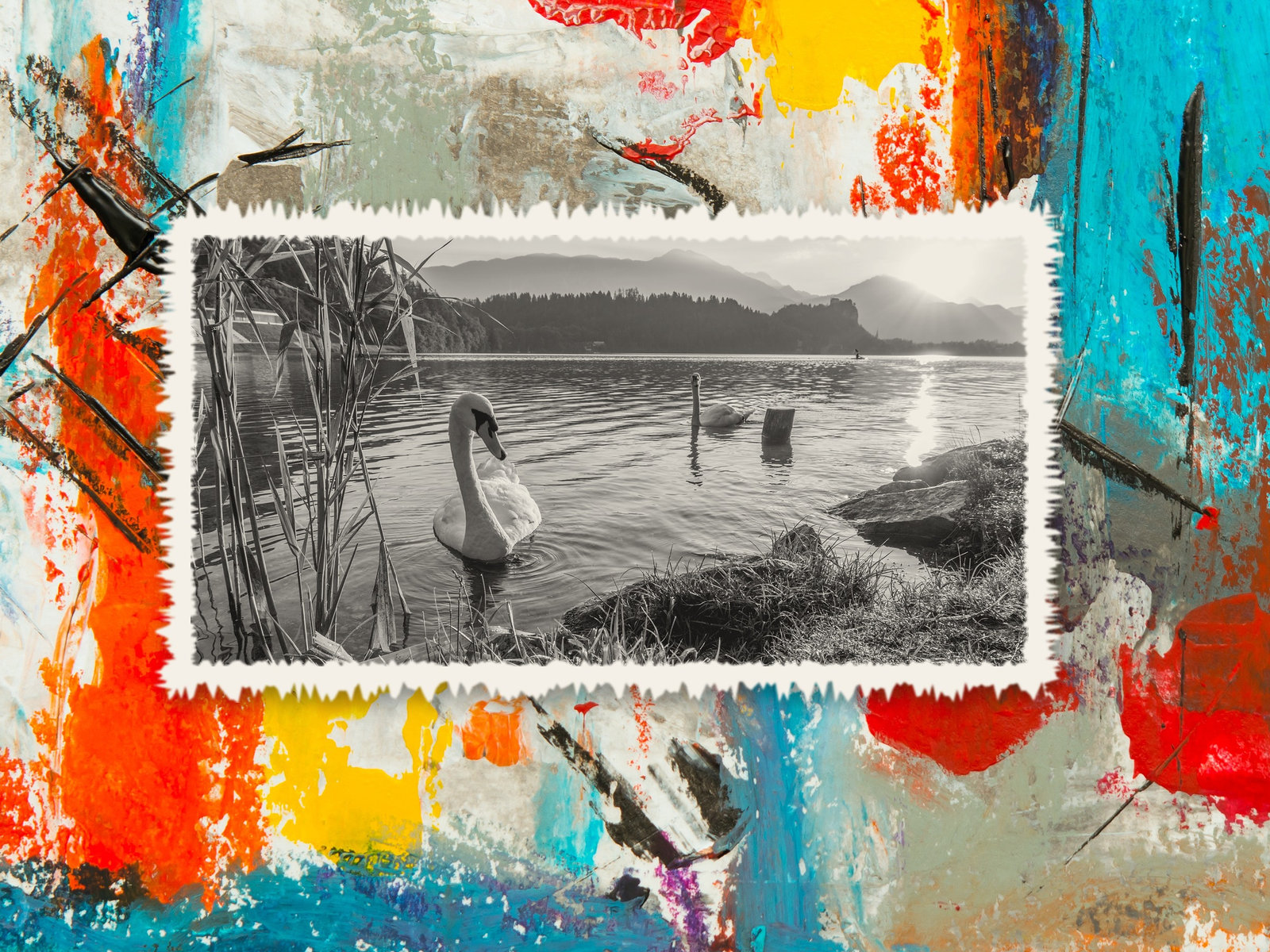
Every piece in Tidelines starts as a photograph. I print in the darkroom on fiber paper, a little darker than I would for a frame, because paint will lift the light later. Then I let the print dry flat for a full day.
The tear comes next, and it is the part people ask about most. A cut edge says the photograph is a window, something separate from the painting around it. A torn edge says it belongs. I tear toward myself, slowly, with the print face up, so the white paper core shows as a soft rim. That rim catches the paint and makes the join look grown rather than placed.
By then the ground is already down: loose color, applied fast, while I still have the place in mind. I press the print into the last wet layer with a soft roller and work the paint over the torn edge with a palette knife. Sometimes I push it a few millimeters onto the photograph. Sometimes I stop just short and leave a breath of paper.
Oil and fiber paper are an old, slightly uneasy pairing. The print is sealed on the back first, and each piece rests for several weeks before varnish, so the layers settle together. It is slow, and it is the only way I have found to make a photograph and a painting share one horizon.